Why Genesis Names the Building Materials
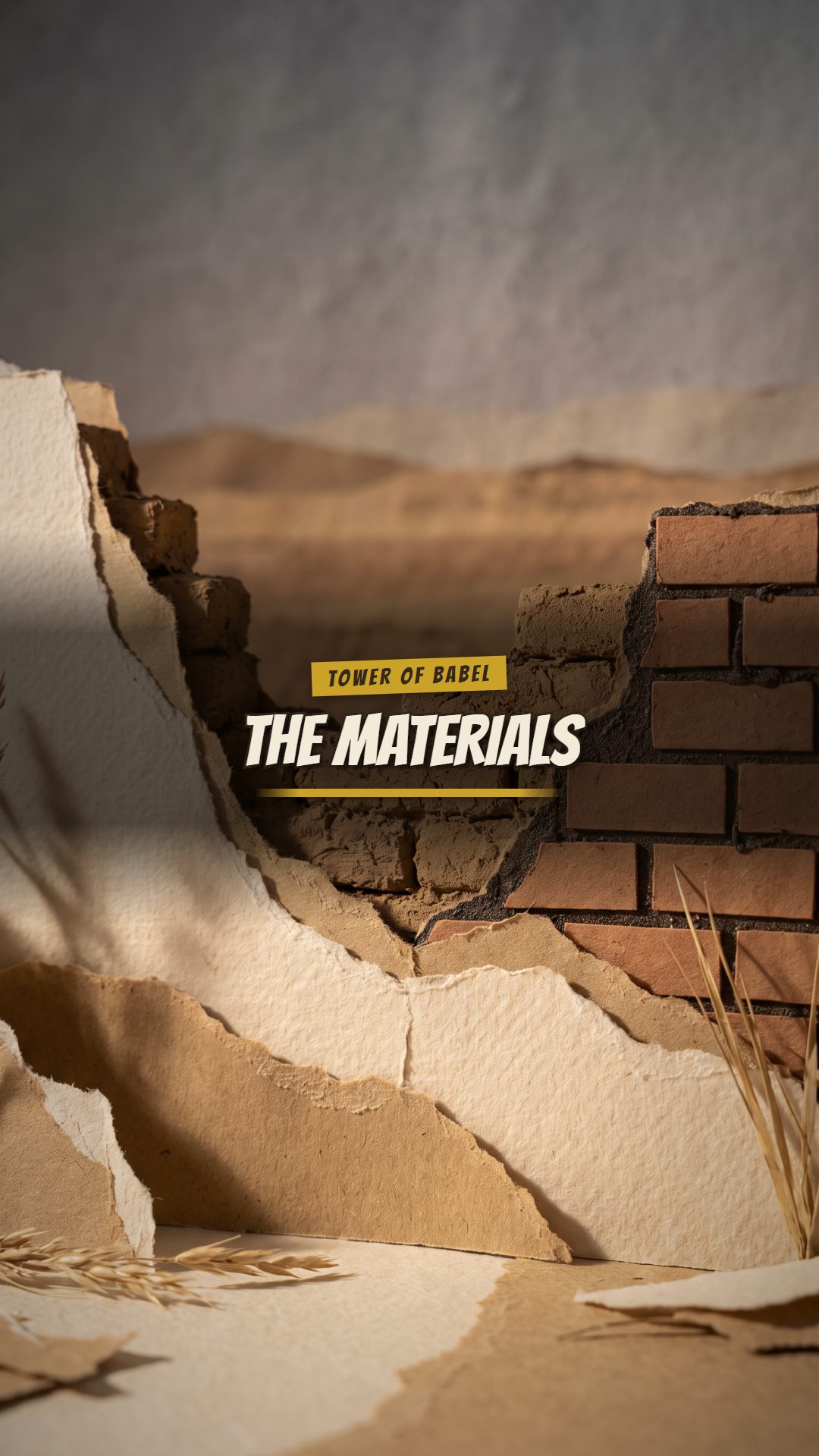
The Claim, Straight
The strangest verse in the Tower of Babel story is a construction spec. Why would a legend stop to specify exactly what the builders built with?
Genesis pauses the story to name the exact materials - and real Mesopotamian archaeology backs up the method.
What the Text Says
Genesis stops mid-story to spell out exactly what the builders used:
"And they said one to another, Go to, let us make brick, and burn them thoroughly. And they had brick for stone, and slime had they for morter."GENESIS 11:3 · KJV
The same chapter-pair already named the cities on that plain, one chapter earlier:
"And the beginning of his kingdom was Babel, and Erech, and Accad, and Calneh, in the land of Shinar."GENESIS 10:10 · KJV
The Turn
Excavated Mesopotamian ziggurats are built exactly the way Genesis 11:3 describes: a mud-brick core, sealed and bound with bitumen.
Erech and Accad, the cities named alongside Babel in Genesis 10:10, are the sites archaeologists now call Uruk and Akkad.
The Fine Print
CAVEATCorroborating the construction method and the city names does not confirm the Babel narrative itself happened, or identify any one excavated ziggurat as "the" Tower.
CAVEATIdentifying Erech and Accad with Uruk and Akkad is a place-name identification made by outside scholarship, not a claim the KJV text itself makes.
Questions People Ask
What material was the Tower of Babel made from?
TEXTBrick for stone, and "slime" (tar or bitumen) for mortar, per Genesis 11:3 - the builders' own construction spec, stated directly in the text.
Is there archaeological evidence for the Tower of Babel's construction method?
EXTERNALReal excavated Mesopotamian ziggurats used a mud-brick core sealed with bitumen mortar, matching Genesis 11:3's own description - though this corroborates the setting, it does not confirm the narrative itself happened.
What are Erech and Accad today?
EXTERNALMainstream Assyriology identifies Erech and Accad, named in Genesis 10:10, with the real excavated sites archaeologists call Uruk and Akkad.
Sources Cited
- Genesis 11:3, King James Version: "And they had brick for stone, and slime had they for morter." The construction spec, in the builders' own words.
- Genesis 10:10, King James Version: "And the beginning of his kingdom was Babel, and Erech, and Accad, and Calneh, in the land of Shinar." Erech and Accad are the sites archaeologists now call Uruk and Akkad.
- Ziggurats were built the same way: Encyclopaedia Britannica describes a mud-brick core faced with baked brick, "clad with glazed bricks mortared with bitumen to create a waterproof surface." This corroborates the setting and materials only - it does not confirm the Babel narrative itself happened, or identify any one excavated ziggurat as "the" Tower.
- The Erech/Accad = Uruk/Akkad identification is mainstream Assyriology toponym scholarship, not a claim made by the KJV text itself.