The Camel Test
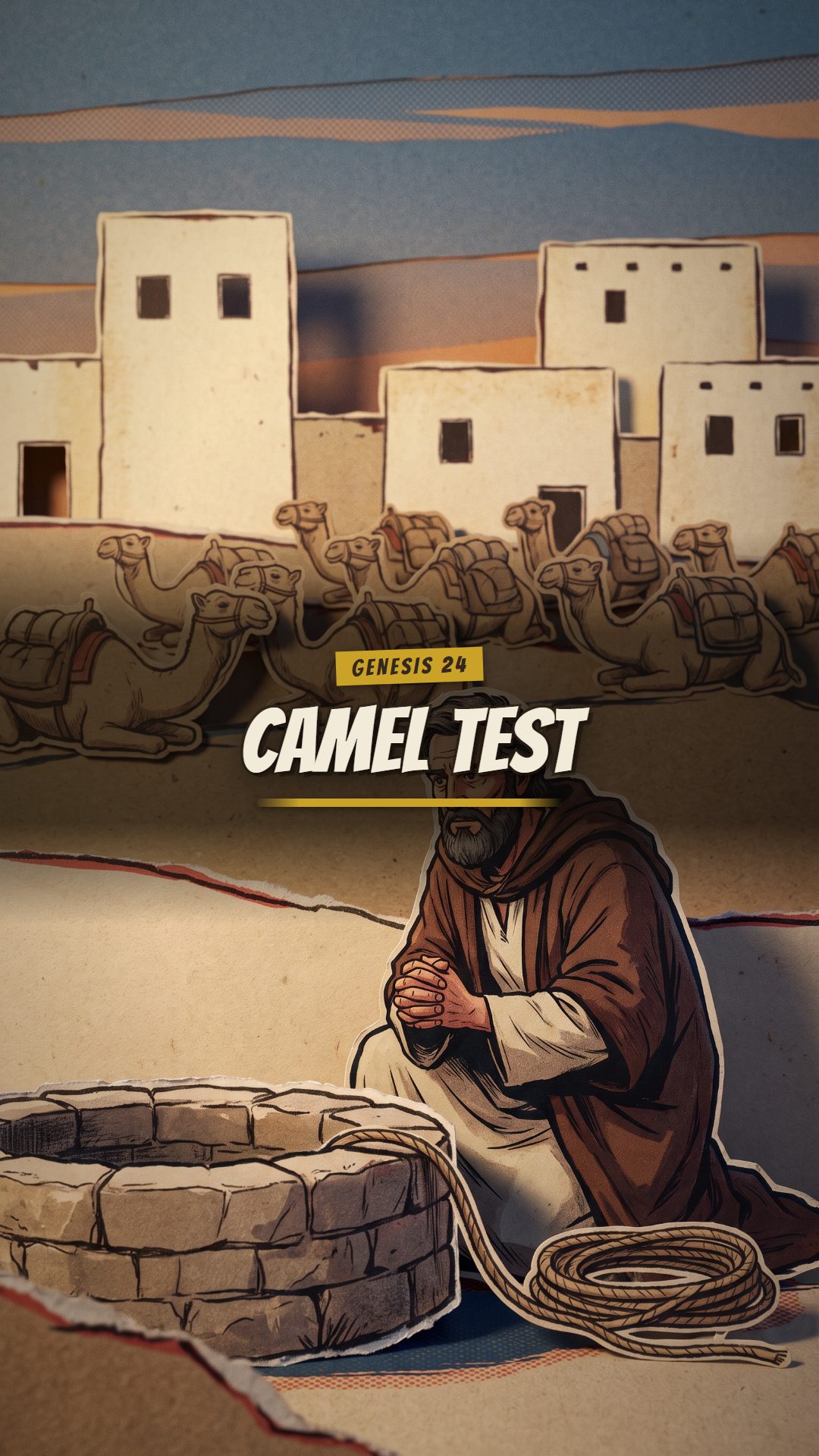
The Claim, Straight
A servant is sent to choose a wife for a man he's never seen meet her. He doesn't interview her. He prays for one very specific, unprompted act - and gets it before he's even finished praying.
He asked her for water. Nobody asked her for the camels.
What the Text Says
Abraham sends his eldest servant, under oath, to find a wife for Isaac from his own country and kindred - not a local Canaanite:
"Thou shalt go unto my country, and to my kindred, and take a wife unto my son Isaac."GENESIS 24:4 · KJV
"And the servant took ten camels of the camels of his master... and he arose, and went to Mesopotamia, unto the city of Nahor."GENESIS 24:10 · KJV
At a well outside the city, he prays for a sign - and states, in advance, exactly what it will look like:
"Let it come to pass, that the damsel to whom I shall say, Let down thy pitcher, I pray thee, that I may drink; and she shall say, Drink, and I will give thy camels drink also: let the same be she that thou hast appointed for thy servant Isaac..."GENESIS 24:14 · KJV
The Turn
Rebekah arrives while he's still praying. He asks for a drink. She gives it - then keeps going, on her own initiative, until every camel has finished:
"And when she had done giving him drink, she said, I will draw water for thy camels also, until they have done drinking. And she hasted, and emptied her pitcher into the trough, and ran again unto the well to draw water, and drew for all his camels."GENESIS 24:19–20 · KJV
The Fine Print
CAVEATThe servant's own prayer names the whole act - drink for him, water for the camels too - as a single sign, not two separate tests.
CAVEATGenesis 24 never says aloud what the sign was actually meant to reveal about her character. This short's own framing - that the unasked act is "the part he was really testing for" - is a reading of the scene's structure, not a stated verse.
CAVEATThe servant himself is never named in this chapter - only "his eldest servant." Tradition, not this chapter, identifies him with Eliezer of Damascus (Genesis 15:2).
Questions People Ask
What was the servant actually testing for at the well?
A READINGNot looks, not lineage - an unprompted act. His own prayer names the sign in advance: a woman who offers to water his ten camels too, without being asked (Genesis 24:14). Rebekah does exactly that, unprompted, while he's still praying (24:15, 19-20).
Who was Abraham's servant in Genesis 24?
TEXTGenesis 24 never names him - only "his eldest servant." Tradition identifies him with Eliezer of Damascus, the steward Abram names in Genesis 15:2, but that identification isn't stated in chapter 24 itself.
Did Rebekah end up marrying Isaac because of this sign?
TEXTYes. The servant follows the sign back to her family, and Genesis 24:67 closes it out plainly: "Isaac brought her into his mother Sarah's tent, and took Rebekah, and she became his wife; and he loved her..."
Sources Cited
- Genesis 24:2–4, King James Version: Abraham's oath sending his servant to his own country and kindred – quoted above.
- Genesis 24:10, King James Version: ten camels, sent to the city of Nahor.
- Genesis 24:12–14, King James Version: the servant's own prayer, naming the sign in advance – quoted above.
- Genesis 24:15 and 24:19–20, King James Version: Rebekah's arrival and her unprompted offer – quoted above.
- Genesis 24:67, King James Version: Isaac and Rebekah's marriage.
- Genesis 15:2, King James Version: Eliezer of Damascus, named as Abram's own steward in an earlier chapter – the traditional (not chapter-24-stated) identification of the servant.