Abraham's Other Son
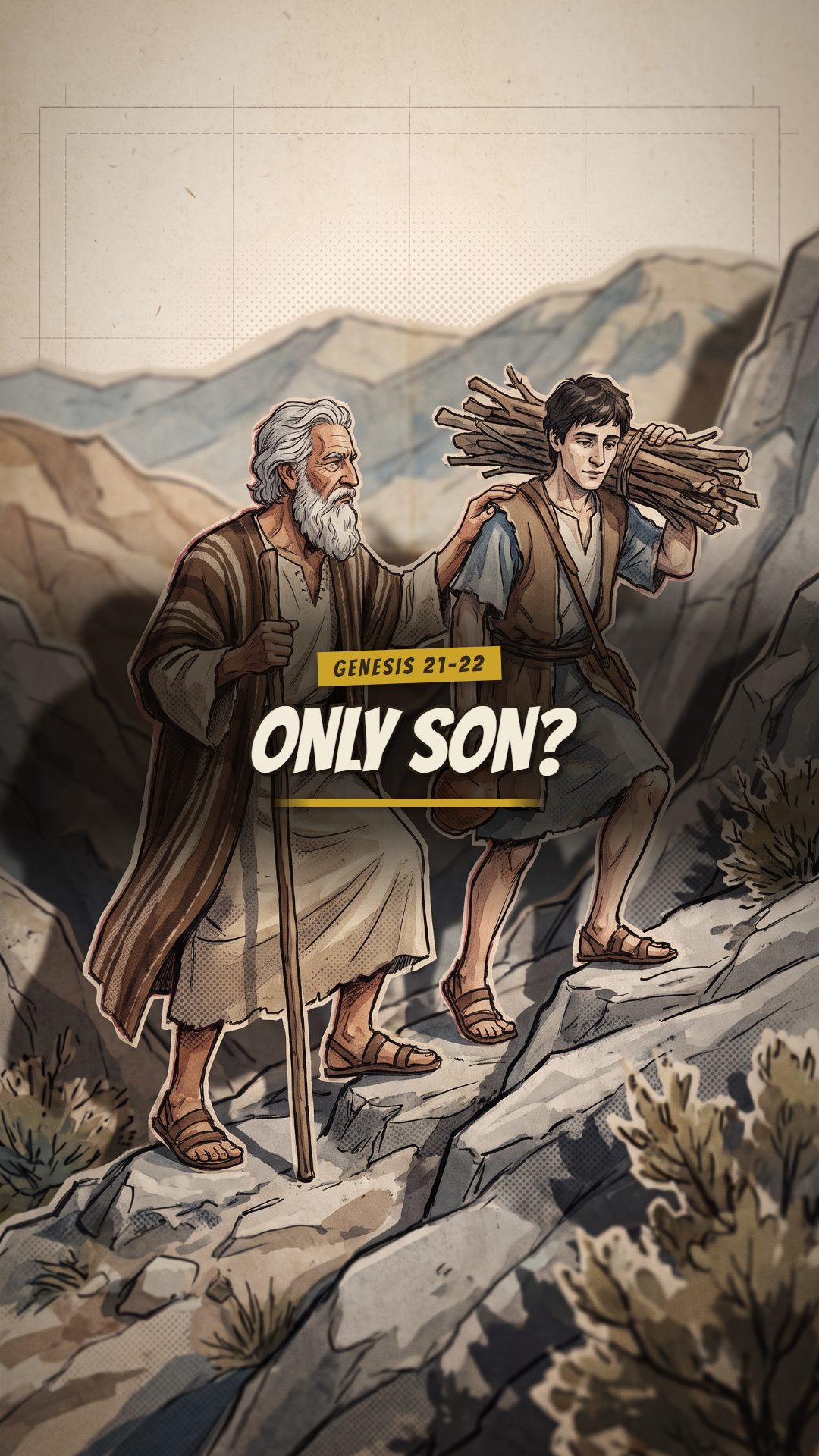
The Claim, Straight
God calls Isaac "thine only son" three times in Genesis 22. Abraham already has two sons by then - Ishmael, born years earlier, is still alive.
The word "only" isn't a headcount. Genesis has already told you why it's used, one chapter earlier.
What the Text Says
Ishmael is born first, to Hagar, when Abram is eighty-six:
"And Hagar bare Abram a son: and Abram called his son's name, which Hagar bare, Ishmael. And Abram was fourscore and six years old, when Hagar bare Ishmael to Abram."GENESIS 16:15–16 · KJV
Isaac is born years later, to Sarah - Ishmael is already a boy by this point:
"For Sarah conceived, and bare Abraham a son in his old age... And Abraham called the name of his son that was born unto him, whom Sarah bare to him, Isaac."GENESIS 21:2–3 · KJV
Then, at the binding of Isaac, the same phrase lands three separate times - once God speaking directly, twice more a voice out of heaven:
"Take now thy son, thine only son Isaac, whom thou lovest... for now I know that thou fearest God, seeing thou hast not withheld thy son, thine only son from me... thou hast done this thing, and hast not withheld thy son, thine only son."GENESIS 22:2, 12, 16 · KJV
The Turn
Genesis already answers the puzzle, one chapter before it's even a puzzle. In the same breath, God names which son the covenant runs through - and promises the other one a nation of his own:
"For in Isaac shall thy seed be called... And also of the son of the bondwoman will I make a nation, because he is thy seed."GENESIS 21:12–13 · KJV
The Fine Print
CAVEAT"Only son" is covenant language, not a claim that Ishmael doesn't exist. Genesis itself has already told you, one chapter earlier, that Ishmael is alive and provided for.
CAVEATThe covenant is named to Isaac specifically, by name, one chapter earlier still: "thou shalt call his name Isaac: and I will establish my covenant with him for an everlasting covenant" (Genesis 17:19) - said before he's even born.
CAVEATGenesis 21:14 has Abraham send Hagar and Ishmael away with bread and water before Genesis 22 happens; Genesis 21:20 states outright that God stayed with the boy in the wilderness - sent away, not written out.
CAVEATBoth sons return at the very end of the story: Genesis 25:9–10 has Isaac and Ishmael together bury their father in the same cave.
Questions People Ask
Was Isaac really Abraham's only son?
TEXTGenesis quotes it three times - "thine only son Isaac" (Genesis 22:2), then "thine only son" twice more (22:12, 22:16). But Ishmael, Abraham's firstborn by Hagar (Genesis 16:16), is still alive at that point - sent away, not dead.
What happened to Ishmael after he was sent away?
TEXTGenesis 21:14 says Abraham sent him and Hagar into the wilderness of Beersheba with bread and water. Genesis 21:20 states plainly, "And God was with the lad; and he grew, and dwelt in the wilderness, and became an archer" - alive and provided for, not written out.
Why does the covenant run through Isaac and not Ishmael?
A READINGGod states it directly one chapter before the "only son" scene: "for in Isaac shall thy seed be called" (Genesis 21:12). In the very same verse, God promises Ishmael a nation of his own: "of the son of the bondwoman will I make a nation, because he is thy seed" (21:13).
Sources Cited
- Genesis 16:15–16, King James Version: Ishmael's birth to Hagar, Abram aged eighty-six – quoted above.
- Genesis 21:2–3, King James Version: Isaac's birth to Sarah – quoted above.
- Genesis 22:2, 22:12, and 22:16, King James Version: the three "thine only son" statements – quoted above.
- Genesis 21:12–13, King James Version: the covenant runs through Isaac; Ishmael promised his own nation – quoted above.
- Genesis 17:19, King James Version: the covenant established with Isaac by name, before his birth – quoted above.
- Genesis 21:14 and 21:20, King James Version: Hagar and Ishmael sent away, then provided for in the wilderness.
- Genesis 25:9–10, King James Version: Isaac and Ishmael bury Abraham together.