The Tree of Life Is Why Eden Shut
The Claim, Straight
Eden held two special trees, not one. Almost everyone can name the first. Almost no one remembers the second - and it's the one Genesis guards.
The popular version says the fruit is why the gate shuts. Genesis gives its own, different reason for that.
What the Text Says
Two trees, named side by side, at the garden's founding:
"The tree of life also in the midst of the garden, and the tree of knowledge of good and evil."GENESIS 2:9 · KJV
The famous part - the one everyone remembers:
"She took of the fruit thereof, and did eat."GENESIS 3:6 · KJV
The verse gives its own reason for what happens next, and names the second tree by name:
"Lest he put forth his hand, and take also of the tree of life, and eat, and live for ever ... Therefore the LORD God sent him forth ... he placed at the east of the garden of Eden Cherubims, and a flaming sword which turned every way, to keep the way of the tree of life."GENESIS 3:22–24 · KJV
What the Sword Actually Guards
Read the three verses in order: the reason comes first, the guard comes second, and both name the same tree.
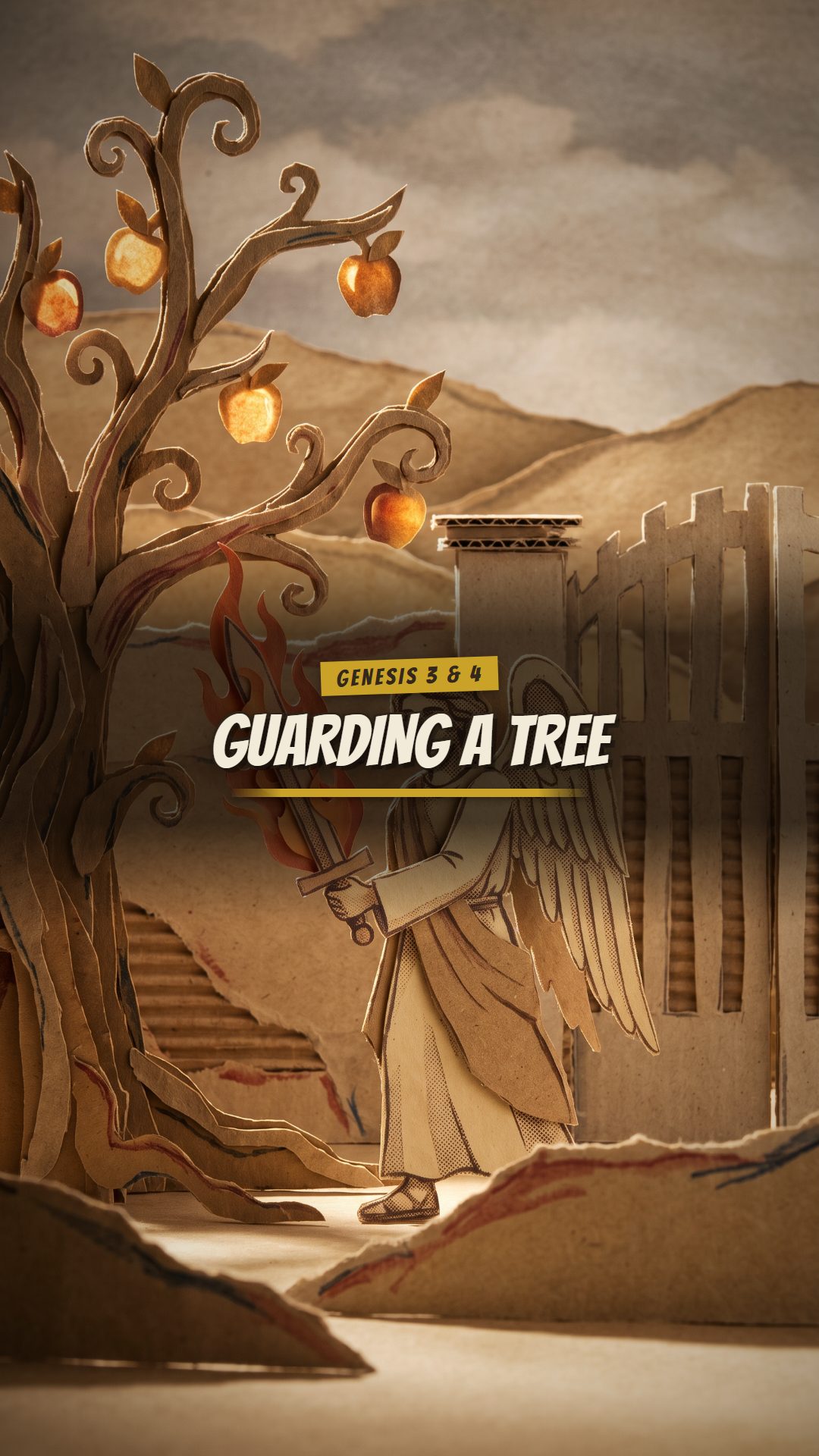
The sword faces the tree of life, not the memory of the fruit already eaten. Everyone remembers the first tree. The text spends its last verses guarding the second.
The Fine Print
CAVEATGenesis never says Adam and Eve did NOT die on the day they ate. Reading the tree-of-life block as part of why "surely die" (Genesis 2:17) wasn't instant is this episode's own invited reading of the sequence, not something either verse states outright.
CAVEATThe cherubim and flaming sword are described only by what they do - "to keep the way of the tree of life." The text gives no further physical description of either.
CAVEAT"Live for ever" is the KJV's own phrase for what the second tree offered. The verse states it plainly - this episode adds nothing beyond it.
Questions People Ask
How many trees did Eden have?
TEXTAt least two, named side by side in Genesis 2:9: "the tree of life also in the midst of the garden, and the tree of knowledge of good and evil." Only the second one gets quoted in most retellings.
Why were Adam and Eve driven out of Eden?
TEXTGenesis 3:22-23 gives the reason in its own words: "lest he put forth his hand, and take also of the tree of life, and eat, and live for ever ... Therefore the LORD God sent him forth." The stated reason is about the second tree, not further punishment for the first.
What does the flaming sword in Genesis guard?
TEXTGenesis 3:24 says cherubim and a flaming sword were placed "to keep the way of the tree of life" - guarding access to the second tree specifically, not the garden in general.
Sources Cited
- Genesis 2:9, King James Version: "the tree of life also in the midst of the garden, and the tree of knowledge of good and evil." Eden's own two trees, named side by side.
- Genesis 3:6, King James Version: "she took of the fruit thereof, and did eat." The famous part - the one everyone remembers.
- Genesis 3:22, King James Version: "lest he put forth his hand, and take also of the tree of life, and eat, and live for ever." The verse's own stated reason for what comes next.
- Genesis 3:23, King James Version: "Therefore the LORD God sent him forth." The same sentence, the same verse.
- Genesis 3:24, King James Version: "he placed at the east of the garden of Eden Cherubims, and a flaming sword which turned every way, to keep the way of the tree of life." What the sword actually guards, in the text's own words.
- Genesis 2:17, King James Version: "for in the day that thou eatest thereof thou shalt surely die." The earlier warning this page reads alongside the tree-of-life block, named as our own invited reading, not settled text.