The Fugitive Who Built the First City
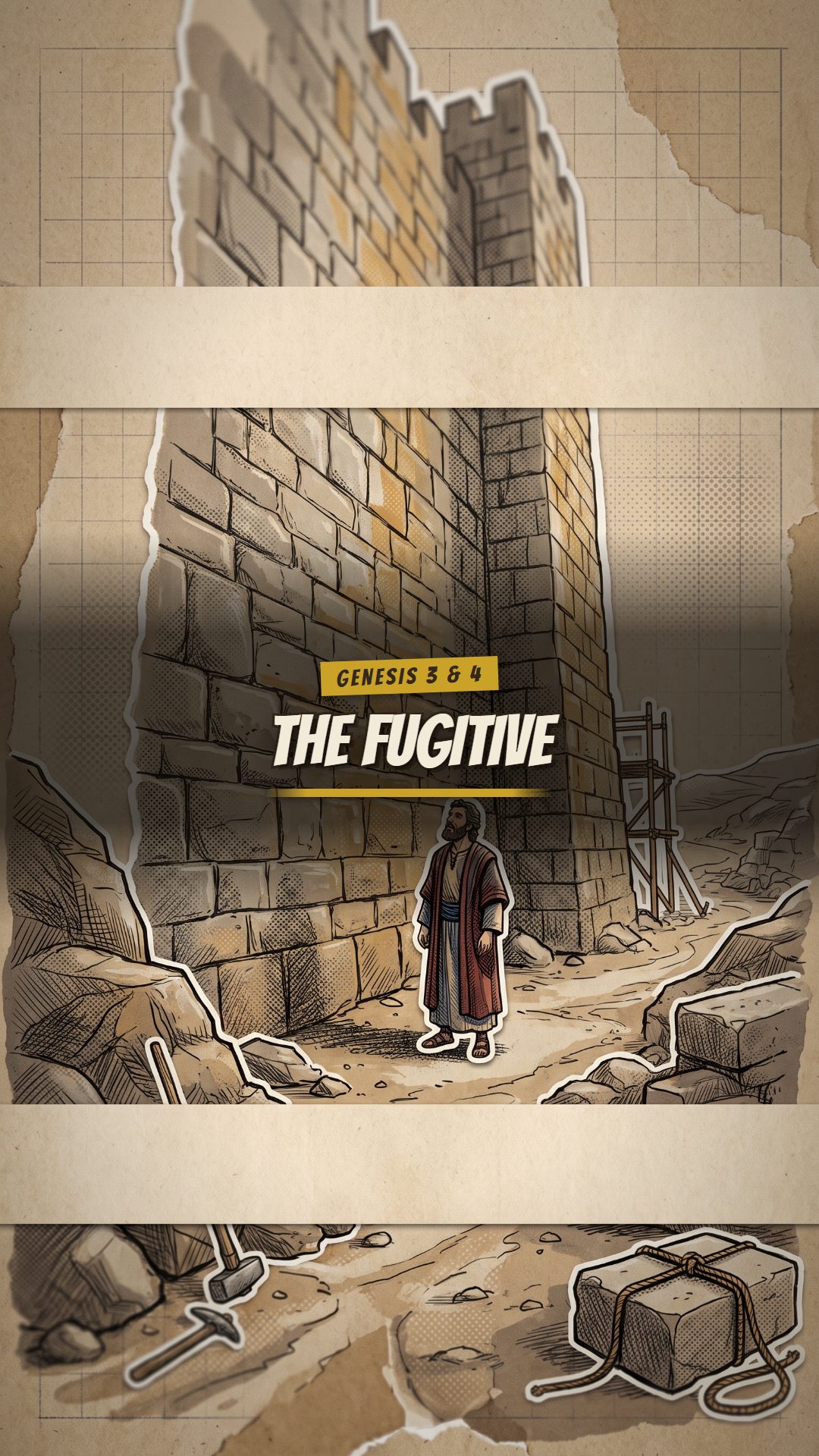
The Claim, Straight
Cain was sentenced to wander the earth with no home. A few verses later, in the same text, he builds a city.
That reads like a contradiction. Genesis doesn't hide it or explain it away - it places the wandering sentence and the city just verses apart, and lets both stand.
What the Text Says
God's sentence on Cain is plain, and it is physical - no home, no settling down:
"When thou tillest the ground, it shall not henceforth yield unto thee her strength; a fugitive and a vagabond shalt thou be in the earth."GENESIS 4:12 · KJV
The next scene is the same man:
"And Cain knew his wife; and she conceived, and bare Enoch: and he builded a city, and called the name of the city, after the name of his son, Enoch."GENESIS 4:17 · KJV
The wanderer's sentence and the wanderer's wall, a few verses apart.
The Order Is the Point
Read the two verses in the order Genesis gives them: the sentence to wander comes first, the city second.
"First" here means the first city Genesis itself names, in the text's own reading order - not a claim about the actual first city in human history.
The Fine Print
CAVEATThe pronoun "he" in Genesis 4:17 most naturally reads as Cain, the subject of the sentence just handed a mark and a wandering sentence - but the text never disambiguates it any further. That's the plain reading, not a certainty the grammar alone proves.
CAVEATThe Enoch this city is named for is Cain's own son (Genesis 4:17) - a different, unrelated man from the Enoch of Genesis 5, of whom the text says only "he was not; for God took him" (Genesis 5:24). Same name, two different men.
CAVEATGenesis never explains how a sentenced wanderer comes to build and settle in a city - it narrates the sentence, then the city, without addressing the shift.
Questions People Ask
Who built the first city in the Bible?
A READINGGenesis 4:17 says "he builded a city, and called the name of the city, after the name of his son, Enoch." The "he" most naturally reads as Cain, the subject of the sentence, though the text never disambiguates the pronoun any further - the plain reading, not a proven certainty.
Was Cain cursed to wander forever?
COMPUTEDThe text never says forever. Genesis 4:12 records Cain's sentence to wander as "a fugitive and a vagabond"; Genesis 4:17, a few verses later, records the same man building a permanent city - and Genesis never explains the shift, it just lets both stand.
Is Cain's city a real archaeological site?
TEXTNo - "first" here means the first city Genesis itself names, in the text's own reading order, not a claim about an excavated site or the actual first city in human history.
Sources Cited
- Genesis 4:12, King James Version: "When thou tillest the ground, it shall not henceforth yield unto thee her strength; a fugitive and a vagabond shalt thou be in the earth." God's sentence on Cain.
- Genesis 4:17, King James Version: "And Cain knew his wife; and she conceived, and bare Enoch: and he builded a city, and called the name of the city, after the name of his son, Enoch." The same man, next scene.
- Genesis 5:24, King James Version: "And Enoch walked with God: and he was not; for God took him." The other, unrelated Enoch, generations later.
- The pronoun ('he') in 4:17 most naturally reads as Cain - nothing else in the passage disambiguates it, our own reading of the text's own grammar.
- 'First' here means the first city Genesis itself names, in the text's own reading order - not an archaeology claim.